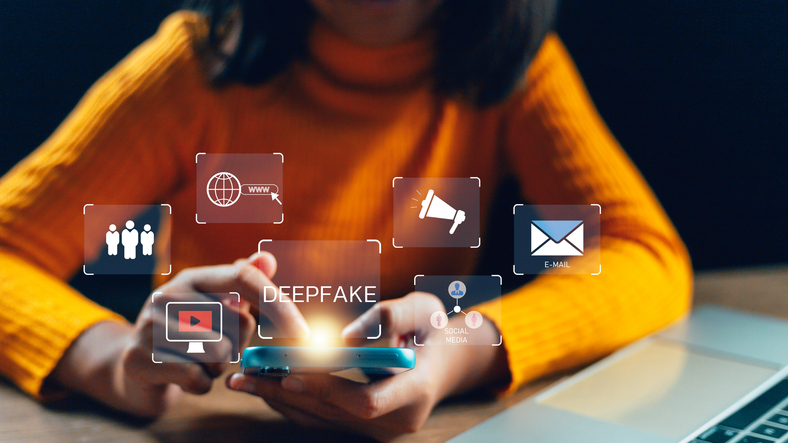
Artificial intelligence (AI) image generation capabilities are improving rapidly. With each new release, AI “tells” are becoming increasingly difficult to identify. The days of six-fingered hands, nightmare-fuel smiles, and scrambled text are long gone. This doesn’t mean AI images are always perfect, but they are much more realistic than ever before.
And that’s the problem: it’s easier than ever to manufacture evidence — and get away with it.
This newfound reality means courts are now buried under troves of AI-generated court filings — aka AI slop — and facing a tidal wave of fabricated evidence. In other words, the very technology hailed as the cure for the access-to-justice crisis is throwing a wrench into the already grinding gears of an overburdened legal system.
Fake evidence isn’t new. For years, litigants have used technology to create falsified documents, text messages, photos, and more. But when created with AI, the results are much more sophisticated — and much harder to identify. Uncovering it isn’t impossible, though. And once exposed, the penalties for submitting AI-generated evidence are severe.
For example, last September, in Mendones v. Cushman & Wakefield, Inc., No. 23CV028772 (Cal. Super. 2025), the plaintiffs submitted video and images in support of their motion for summary judgment. California State Superior Court Judge Victoria Kolakowski determined, primarily through visual inspection, that two videos, three Ring camera photos, and images of text message conversations had been materially altered using AI.
Rather than issue monetary sanctions, the court concluded that the extreme penalty of a terminating sanction was appropriate since “the use of deepfakes in a case significantly undermines the Court’s ability to administer justice, significantly erodes the public’s confidence in the judicial system, and significantly burdens under-resourced and overworked courts with the time-consuming task of assessing whether evidence presented to it during pretrial proceedings was a deepfake.”
The court explained that a “terminating sanction serves the appropriate remedial effect of denying Plaintiffs — and other litigants seeking to make use of GenAI to submit video testimonials — of the ability to further prosecute this action after violating the Court’s and the Defendants’ trust so egregiously.”
More recently, Adams v. Anderson, No. 2025-CA-1309-MR (Ky. App. 2026) was decided in May. In that divorce proceeding, the appellant sought to modify a custody arrangement. During the initial hearing, she testified that she had taken her child to urgent care. Supporting documentation was provided, consisting of a photo of a prescription bottle and additional medical records.
The appellee contended that he’d contacted the urgent care facility and learned that there were no records to support the alleged visit. Based on his assertion that the evidence provided was “fake, photoshopped, or created by artificial intelligence,” the court indicated that it was seeking to hold the appellant in contempt and ordered a hearing to show cause. During the hearing, the appellant admitted that she’d lied and that the supporting documents offered into evidence were fake or altered.
At the conclusion of the hearing, the court held her in contempt and sentenced her to 45 days in jail. The Court of Appeals affirmed the ruling, explaining that: “Providing false testimony during a hearing and submitting altered or fake documents into evidence is the epitome of resisting the authority of the court and degrading its authority… Appellant’s actions were gravely serious and undermined the administration of justice.”
What stood out in these cases was the severity of the penalties imposed by the courts: jail time and the dismissal of the action with prejudice. Both were heavy-handed by design, driven by frustration with dishonesty and subterfuge, and were intended not only to punish but to serve as a clear deterrent to future litigants.
I’m afraid that the message to stop using AI improperly will fall on deaf ears. After all, attorneys haven’t listened, so why should litigants? Case in point: despite the imposition of increasing monetary sanctions, the rate of AI-generated fake case citations has exploded this year. Since April 2023, Damien Charlotin, a senior research fellow at HEC Paris, has maintained a database tracking cases as they occur. As of July 29, 2026, the total stands at 1,812, with 909 occurring this year alone, with no end in sight.
Whether it’s deepfake evidence or hallucinated pleadings, AI-generated falsehoods are flooding the courts, wasting time and draining already-limited resources. Even worse, as the technology improves, its output will only grow exponentially more convincing.
Sure, courts can continue to impose sanctions, dismiss cases, and even resort to incarceration. But the unfortunate truth is that they are fighting a technology that advances faster than detection tools, regulatory bodies, and judicial systems can adapt. For every deepfake exposed, countless others may slip by unnoticed, forcing courts to devote increasingly more of their already-limited time and resources to distinguishing reality from increasingly convincing fiction.
Nicole Black is a Rochester, New York attorney and Principal Legal Insight Strategist at 8am, the team behind 8am MyCase, LawPay, CasePeer, and DocketWise. She’s been blogging since 2005, has written a weekly column for the Daily Record since 2007, is the author of Cloud Computing for Lawyers, co-authors Social Media for Lawyers: the Next Frontier, and co-authors Criminal Law in New York. She’s easily distracted by the potential of bright and shiny tech gadgets, along with good food and wine. You can follow her on Twitter at @nikiblack and she can be reached at niki.black@mycase.com.
The post AI Evidence: Blurring The Line Between Reality And Fiction appeared first on Above the Law.