MAHA might just stand for “Make America Hallucinate Again.”
The Department of Health and Human Services attempted to force its employees back to their desks by unilaterally rescinding existing flexible work agreements. The National Treasury Employees Union opposed the move on behalf of their members and, this week, the Federal Labor Relations Authority rejected every one of HHS’s exceptions to an earlier arbitration award ordering the department to unwind its return-to-office mandate.
On the merits, it wasn’t close. But nobody is going to remember this decision for the merits. They’re going to remember it for this:
in addition to the errors discussed above, nine more citations that the Agency provides are entirely fictitious, eleven do not support the propositions for which they are cited, and ten have partially incorrect citations and do not support the propositions for which they are cited. Overall, twenty-two of the exceptions brief’s twenty-nine footnotes — and thirty-five of the forty-two legal or record citations — are fictitious, erroneous, or irrelevant. Based on the nature and scope of these errors, it appears that the Agency may have used a generative artificial-intelligence (AI) tool in drafting its brief.
This is obviously a false accusation… the agency used a generative super-intelligence tool. Rookie mistake by the FLRA! Case closed!
By way of comparison, the infamous Mata v. Avianca filing that launched a thousand CLEs had six fake cases. HHS cleared that with ten flatly fictitious citations by FedWeek’s count, then threw in another two dozen that don’t say what HHS claims or are cited incorrectly.
So the brief is roughly 83 percent garbage by citation count. A genuine citation is an anomaly.
The opinion offers polite language, noting that it “appears” the agency “may have” used AI. Or the agency’s lawyers may be incredibly dumb. Actually, now that I look at it, maybe the panel was right to hedge here.
While nothing prohibits parties from using AI tools when preparing filings for submission to the Authority, we caution those who do so to be aware that AI continues to present significant risks of error. Therefore, parties should take steps to verify the accuracy of any AI-generated material and ensure that their filings satisfy all regulatory requirements.
When you review the actual caselaw, it’s clear why a tool would reach for fantasy land to satisfy the prompt. The department’s theory was that a presidential memo trumped a five-year collective bargaining agreement. HHS’s top labor relations official testified, per GovExec, that “the president is our chief.” Which may be true, but not really responsive to the contractual agreements binding the agency. Even Trump’s arbitrary return-to-office memo told agencies to implement it “consistent with applicable law,” a begrudging nod to the existence of contractual barriers to his whims.
“I guarantee you they’re out on the ballfields,” Trump said of remote workers. “I guarantee you they’re out playing golf. And you can’t run a country or a company that way.” At which point, Trump left the White House for a week of golfing at Mar-a-Lago.
This is also not a one-off for RFK Jr’s flunkies. Last year’s MAHA report cited studies that don’t exist, with “oaicite” tags lurking in the URLs. The White House waved these off as “formatting issues” at the time. Last month, Judge Christopher Cooper enjoined HHS’s teen pregnancy grant overhaul after finding the solicitation leaned on studies that “appear either not to exist or not to support the propositions” — “a hallmark of AI-generated citations.”
AI hallucinations appear to be HHS’s house style.
It’s unclear if Robert F. Kennedy Jr involved himself in this legal battle personally, but it’s fitting that these AI misadventures keep happening to his department. The anti-vaccine movement is, in many ways, the analog precursor to the rise of AI hallucinations. The “do your own research” mantra was always about rejecting quality citations to rummage around for fake or misrepresented numbers to back up the movement’s priors. Every time a study would confirm — again — that there’s zero scientific data for MMR vaccines causing a gut disease that leads to autism, a little voice would sound off in their heads to say, “no, you’re right to push back, that data must be wrong.”
Until now, that voice was a brain worm. Now it’s a large language model.
The administration’s return-to-office crusade was sold as a necessity to guarantee accountability in government work. Looking at 35 bad citations out of 42, and you have to ask: where were the government lawyers working from?
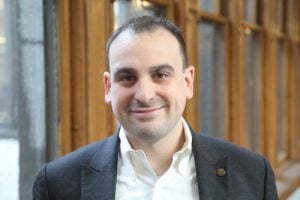 Joe Patrice is a senior editor at Above the Law and co-host of Thinking Like A Lawyer. Feel free to email any tips, questions, or comments. Follow him on Twitter or Bluesky if you’re interested in law, politics, and a healthy dose of college sports news.
The post Over 80 Percent Of Citations ‘Fictitious, Erroneous, or Irrelevant’ In Trump Admin Brief appeared first on Above the Law.