
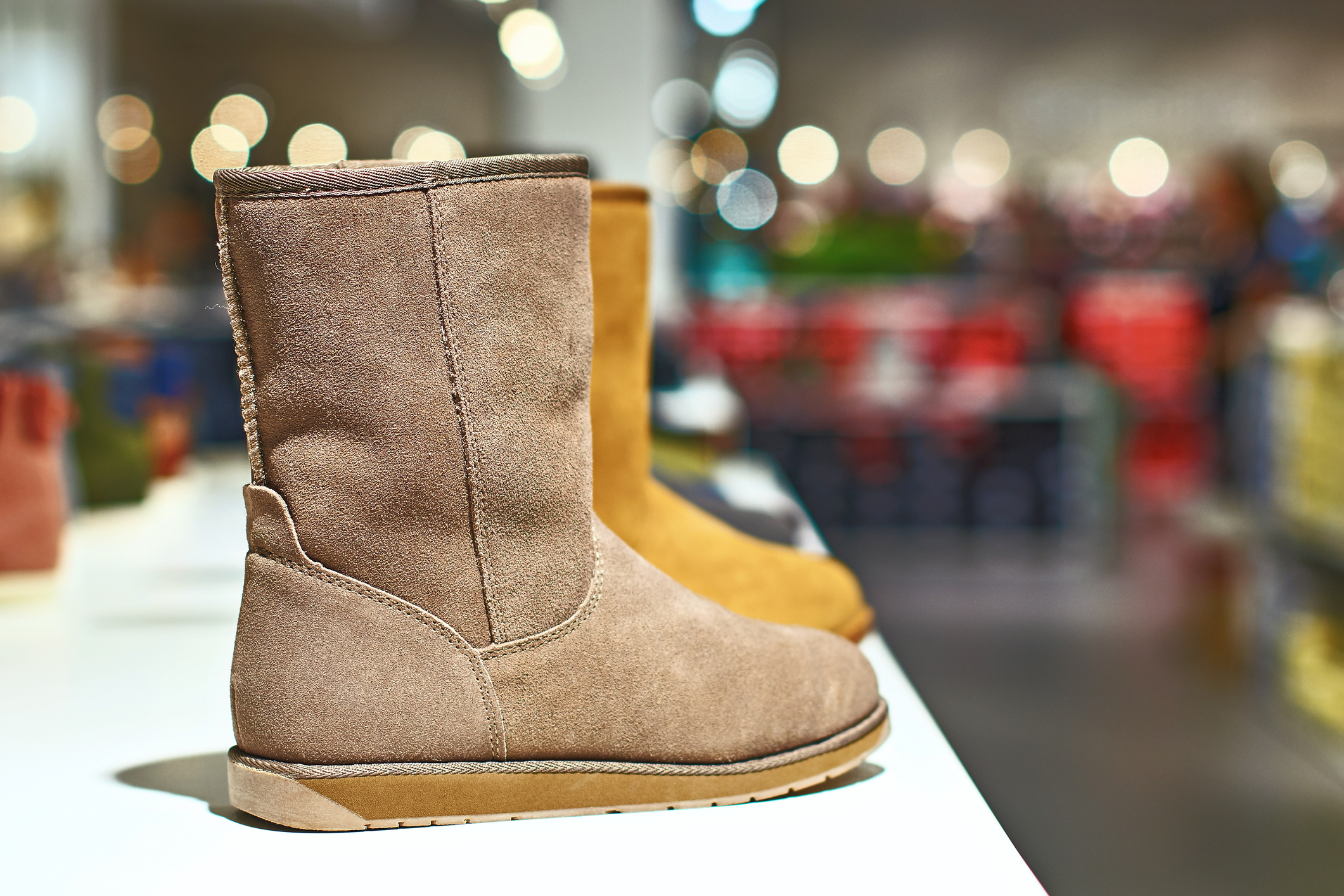
One of my objectives with my high school IP class is to impress on the students how IP disputes can often mirror what happens at recess, where the tables can be turned against the playground bully in an instant. To illustrate this phenomenon with a recent IP litigation example, I walked my class through the recently filed complaint by the owners of the online storefront and near-luxury brand, Quince, against Deckers Footwear, which owns the popular Uggs footwear line. Quince’s complaint alleges that “Deckers is trying to prevent lawful competition through ‘template’ lawsuits.” Quince goes further to accuse Deckers of operating a “litigation assembly line” by churning out template complaints asserting exclusive rights over basic and unprotectable product features,” as part of a scheme to solidify its majority position in the “sheepskin casual footwear market” through abusive litigation practices. The filing is quite a turnaround from a few years ago, when it was Quince being sued by Deckers for trade dress and design patent infringement related to Quince’s popular dupes of certain Uggs models, including the Classic Ultra Mini.
With the earlier Deckers lawsuit heading for trial with respect to the design patent claims, it makes sense that Quince would try to leverage its earlier win on the trade dress issues to increase the pressure. For those unfamiliar with the prior round of litigation between Quince and Deckers, this article does a good job of hitting the highlights. In that case, Deckers called out Quince’s approach of targeting “high-revenue” footwear styles for copying. In support, it pointed out that Quince did not have any footwear designers on staff, even as it offered a number of models that were dupes of top-selling Uggs products. For its part, Quince argued that Deckers’ design patent was invalid and that the trade dress claims failed for a host of reasons, including genericness. On summary judgment, the court declined to invalidate the design patent, hence the upcoming infringement trial with respect to those claims. On trade dress, however, it was a clean sweep in Quince’s favor, with the court finding that “the designs were unprotectable as generic.” This was true even when there was no evidence that the competing designs predated those of Uggs, and where Quince provided no evidence demonstrating that those competing designs were not knock-offs themselves.
Barring settlement, the court’s trade dress decision — as well as whatever results from the upcoming design patent trial — almost certainly faces appellate review in the future. In the meantime, however, Quince is clearly trying to press its newfound advantage with its new filing on antitrust grounds. That filing puts Deckers’ prior trade dress litigation strategy in the crosshairs, while introducing at least the prospect that Deckers will face monetary consequences for its monopolistic overtures. Definitely a case to watch for those of us who consult with clients on issues around dupes.
What about my students, many of whom are proud Uggs owners? All but one had never heard of Quince — and when I showed them a listing on Quince’s website for the “Australian Shearling Mini Boot” the reaction was unanimous. “Those look like Uggs!” When I pressed them, however, about what specific design elements led them to that exclamation, some doubt about whether Quince’s version was a direct copy or a dupe started to creep in. And when I asked whether anyone would buy the Quince product thinking that it was an Ugg product, the response was unanimous as well that no right-thinking person would. As an exercise, it was interesting to see how their gut reaction as to whether a dupe was infringing shifted once they were confronted with some of the legal background on what commercial harm the trademark laws are really designed to protect.
One can argue that these students were perhaps more brand-focused and sophisticated than average consumers. Or that their initial reaction was tainted by the fact that for them Uggs was a brand they wore themselves, and that the thought of wearing a Quince dupe was not appealing to them. At the same time, they applauded Quince’s new filing, at least from the perspective of trying to punish Deckers for its prior bullying behavior against less-resourced erstwhile competitors. And while they might not be Quince’s target customer for the foreseeable future, they appreciated Quince’s efforts to promote fair competition at a lower price point that might be more accessible for certain customers. As always, I left the class impressed with the capacity of the students to appreciate the competing narratives, even as their innate senses of sympathizing with the underdog seemed to propel them in Quince’s direction with respect to a rooting interest in this dispute.
Ultimately, at least from Quince’s perspective, its new filing is a prime example of the bully getting their due. While we need to wait and see how both the new case and the case heading to trial turn out, I am sure Quince enjoys being on the distributing end of a litigation punch, after absorbing early hits from Deckers’ end. It probably also helps that Quince just closed on a $500 million funding round, because we all know litigation is expensive and can be a drain on corporate resources. For now, it seems like Quince absorbed the lesson from the classic Charles Atlas magazine ads — one shouldn’t be scared of confronting bullies, but only once you are strong enough to take them on.
Please feel free to send comments or questions to me at gaston@k2k.law or via Twitter: @gkroub. Any topic suggestions or thoughts are most welcome.
Gaston Kroub lives in Brooklyn and is a founding partner of Kroub, Silbersher & Kolmykov PLLC, an intellectual property litigation boutique, and Markman Advisors LLC, a leading consultancy on patent issues for the investment community. Gaston’s practice focuses on intellectual property litigation and related counseling, with a strong focus on patent matters. You can reach him at gkroub@kskiplaw.com or follow him on Twitter: @gkroub.
The post Not Getting Duped appeared first on Above the Law.